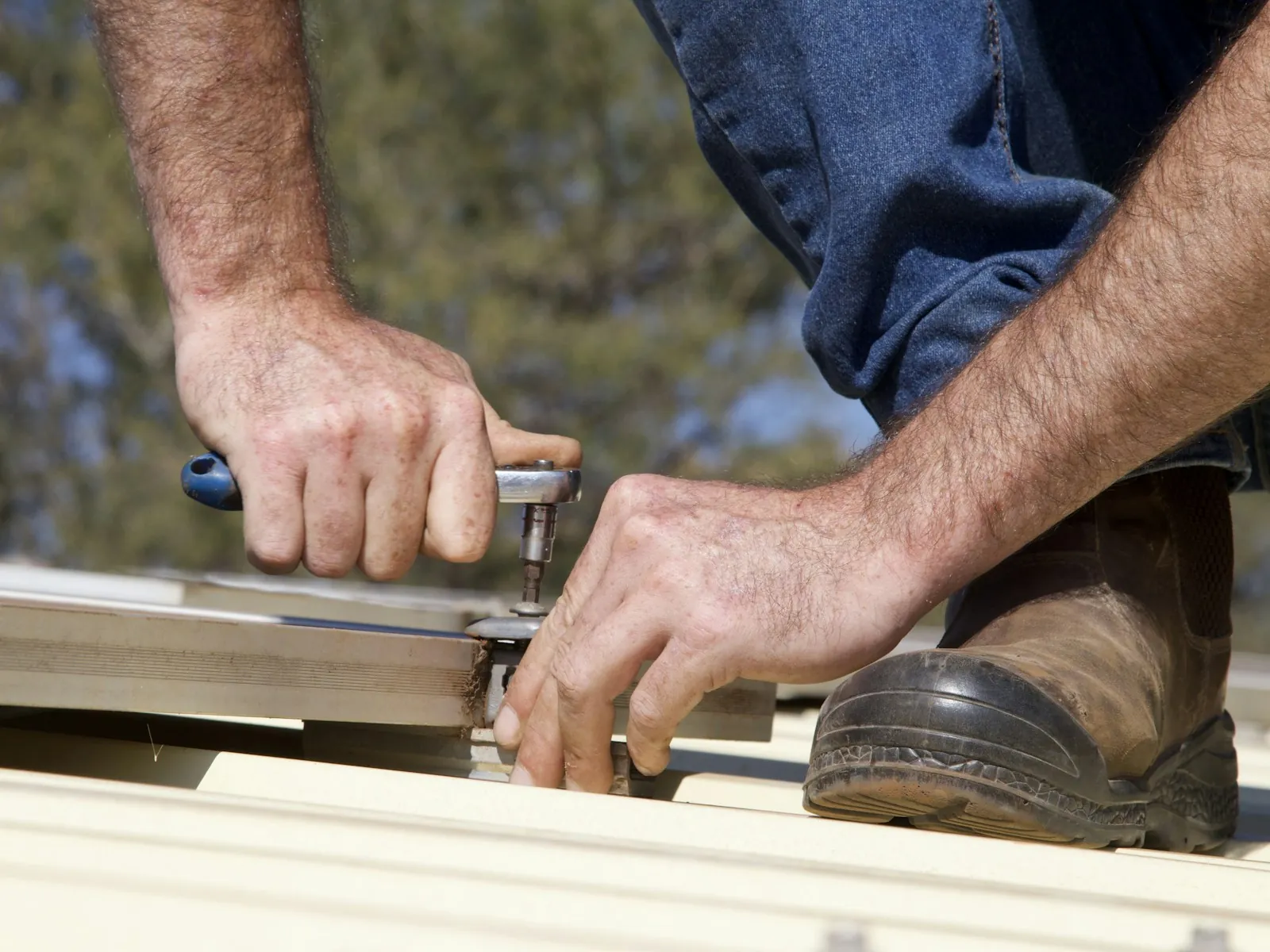
Roof replacement in East Orange, NJ with the unit count settled first, because three dwelling units changes both the permit and the way the state classifies the whole building.
Before the covering, the count. One or two units and detached, a covering replacement is ordinary maintenance with no permit and no inspection. At three units it is permitted construction work, and the building is also a registered multiple dwelling on a five-year inspection cycle. Two identical houses on one street can sit either side of that line.
An architectural asphalt roof in New Jersey runs $9,500 to $26,000, and on a typical 2,000 square foot house most people pay $12,000 to $18,000 installed. Those are state figures. A national calculator reads low here, because northern-climate detailing at the eaves is not optional and is not free.


Those are New Jersey figures for an architectural asphalt roof, and on a typical 2,000 square foot house most people pay $12,000 to $18,000 installed. What moves a quote in this city before the roof does is the unit count, because at three units the work becomes permitted construction and the building changes legal class. Locally the unit count moves a quote before the roof does. One or two units and detached means no permit and no waiting; three means permit, inspection and tenants. After that it is access, because a frontage that has to carry material up and waste down is labor a suburban quote does not contain.
A one- or two-family detached house, so the work is ordinary maintenance and nothing is waiting on a permit. A simple roof shape, somewhere to put a dumpster, and a deck that turns out sound.
Three units and up, so permit and inspection are part of the program. Tenants, who need notice and somewhere to park. No side access, so everything moves through the frontage. And board sheathing that has to be made good rather than nailed into.
How decking replacement is priced. It belongs in the scope as a rate per sheet, because nobody knows how much has softened until the covering is off -- and a lump figure is a guess in one direction or the other.
These are the jobs it usually becomes, and what each one costs.
This is the building this city is made of, and the one roofing advice ignores.
Most low slope in this city sits on three-family houses and rear additions, at $5 to $14 per square foot by system.
Architectural at $5.50 to $8.00 per square foot against three-tab at $4.50 to $6.50 is the difference between two quotes that otherwise look identical.
Replacing an existing slate roof is $20 to $35 per square foot, so $40,000 to $70,000 on an average house.
Fixed costs do not shrink, and that is the part nobody volunteers.
One is about your building and one is about your covering, and most quotes in this city establish neither.
At one or two and detached, replacing a covering is ordinary maintenance under N.J.A.C. 5:23-2.7: no permit, no inspection. At three it is permitted construction work, and the building is also a registered multiple dwelling under N.J.S.A. 55:13A-1 et seq. on a five-year inspection cycle. Nothing about the roof explains that.
Slate outlives almost everything fixed to it. Slipped slates usually mean corroded nails; leaks at a valley usually mean a rusted lining. Both are repairs. Replacing an existing slate roof is $20 to $35 per square foot, so the difference between diagnosing that correctly and not runs to tens of thousands.
On asphalt, if the covering away from the leak still lies flat, holds its granules and is not brittle, the roof has life in it and a repair is the right job. A failed flashing or a split upstand is hundreds of dollars and is routinely produced as proof that the whole roof is finished.
Two coverings is the practical ceiling. A roof already at two is a tear-off whatever anybody quotes, and it takes two minutes to check at the rake edge. It is the fastest way to tell whether the quotes in front of you describe the same job.
Free inspection, the unit count and permit position in writing, then a written quote. No curbside numbers.
Tell us the address and how many dwelling units are in the building. That one answer settles whether this is ordinary maintenance or permitted work, and whether the building is a registered multiple dwelling -- which is usually the first thing an owner wants to know.
Both together. On slate the underside tells you whether the nails have gone, which is the difference between a repair and a replacement. On asphalt the eaves tell you whether an ice barrier was ever there. Layer count gets checked at the rake edge while we are up.
Named details rather than 'replace roof': ice barrier coverage, drip edge, underlayment, nailing, and decking priced per sheet. The permit position is stated in writing, including when the honest answer is that none is needed.
Tenant notice and a waste route agreed before the day, a sequence that keeps every unit covered overnight, nails swept, and a before-and-after set that is yours whatever you decide to do next.
Two of them are specific to New Jersey and one is specific to buildings like the ones on this street.
New Jersey registers home improvement contractors rather than licensing roofers, and the number belongs on every advert and contract. The register is public. The wording is a tell too: the code says not to call it a license, so a New Jersey roofer advertising their roofing 'license' has not read the rules closely.
This is the one nobody asks. One or two units detached is ordinary maintenance; three is permitted work on a registered multiple dwelling. A quote silent on which your building is has skipped the first question of the job.
A contractor who does not work slate will reliably recommend stripping it, because that is the job they can do. Ask what specifically has failed -- the slate, the nails or the flashings -- and ask to be shown.
Both are invisible once the roof looks finished and both are what gets you through February. Coverage at the eaves and the nailing pattern are measurable lines on a scope. 'Replace roof' is not a scope.
No figure should be given without the roof and the roof space being looked at. We do not quote at the curb and we do not quote from a photograph alone.
Take two identical pre-war houses on the same East Orange street. One is divided into two flats, the other into three. Nothing about their roofs differs by a single shingle, and yet the state treats them completely differently -- for two separate reasons that happen to share the same threshold.
First the permit. Replacing a roof covering on a detached one- or two-family dwelling is ordinary maintenance under N.J.A.C. 5:23-2.7: no permit, no notice, no inspection. At three units that exemption no longer reaches the building, so the identical work becomes permitted construction with an inspection at the end of it.
Then the classification. At three or more dwelling units the building is a multiple dwelling under the Hotel and Multiple Dwelling Law, N.J.S.A. 55:13A-1 et seq. It is registered with the DCA Bureau of Housing Inspection and inspected on a five-year cyclical basis, with a certificate of inspection filed afterwards. That is an ongoing maintenance regime rather than a one-off approval, and it applies whether or not anybody is doing work on the roof. Owners in this city are rarely told either of these by a roofer, and both belong in the written scope.

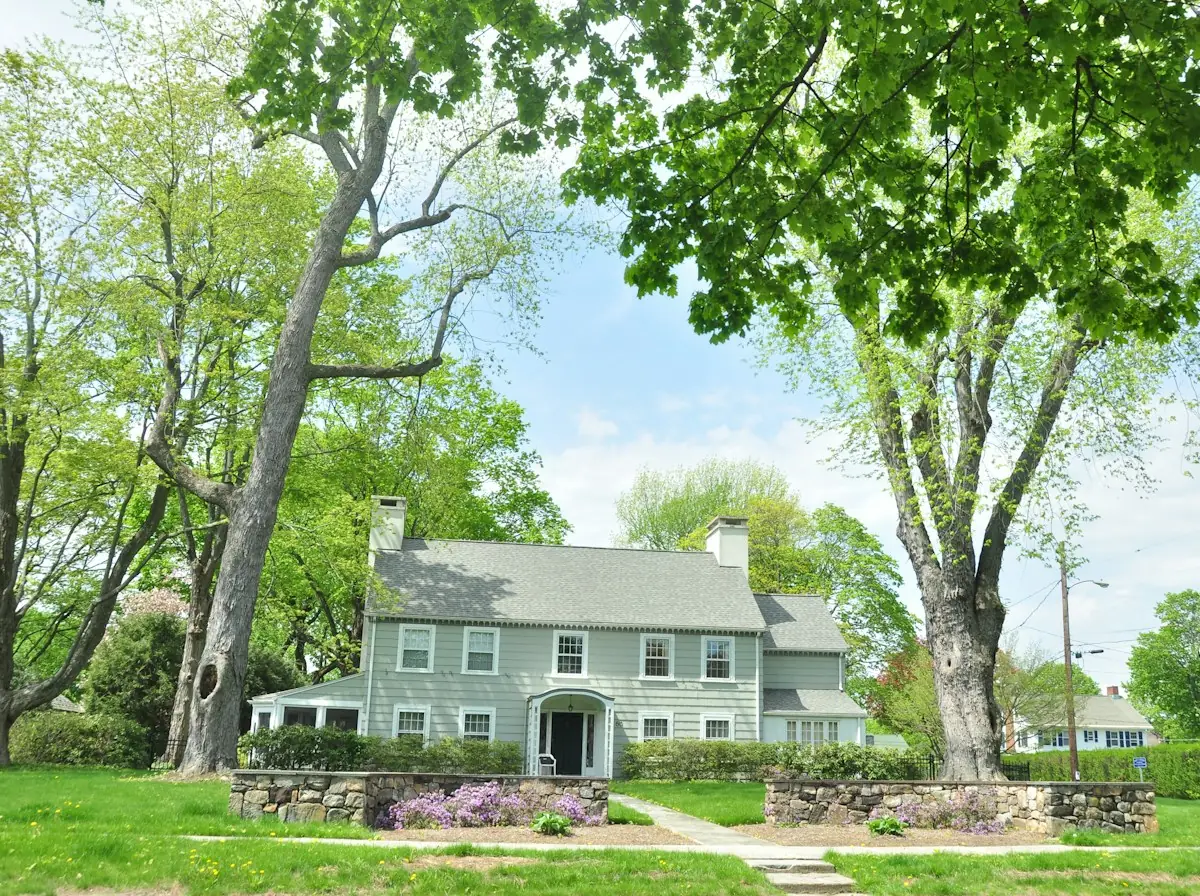
An Essex County city that grew as a streetcar and railroad suburb and was built out almost entirely before the second world war. Dense, overwhelmingly pre-1940, and weighted heavily towards two- and three-family houses alongside apartment buildings and a smaller share of single-family homes.
Unit count decides more here than the covering does. At three dwelling units a roof replacement is permitted construction rather than ordinary maintenance, and the building is also a registered multiple dwelling on a five-year inspection cycle. Two identical houses on one street can sit either side of that line.
East Orange has one of the highest shares of two- and three-family housing in Essex County, which is why the three-unit threshold matters more here than almost anywhere else in the state.

East Orange neighborhood by neighborhood, plus Orange and Irvington. Unit count and build era change street by street and both change the job.
The largest houses, and where slate survives.
Genuinely mixed eras. A neighbor proves nothing.
Duplexes divided into three, and the traces that leaves.
Tight frontages, tenants, and nowhere to park a dumpster.
Flat roofs behind parapets. Access comes first.
Same buildings, a different construction office.
Three-plus units is the default, not the exception.
The questions that decide this job, answered before you ask.
Only where it has actually softened, and as a rate per sheet in the written scope rather than a lump guess. Worth knowing that wholesale decking replacement for rot also takes the job out of ordinary maintenance, so on a one- or two-family house it can change the permit answer partway through.
Only on one existing layer with a sound deck. Two coverings is the practical ceiling, and an overlay also buries the eaves detail -- so if there was never an ice barrier down there, an overlay guarantees there still is not. In this climate that is the wrong saving.
An architectural asphalt roof in New Jersey runs $9,500 to $26,000, and on a typical 2,000 square foot house most people pay $12,000 to $18,000 installed. Per square foot that is $5.50 to $8.00 for architectural and $4.50 to $6.50 for three-tab. Slate is a different market entirely: $20 to $35 per square foot to replace an existing one.
Yes. The ordinary-maintenance exemption in N.J.A.C. 5:23-2.7 reaches one- and two-family dwellings, so at three units a covering replacement becomes permitted construction work with an inspection at the end. There is a second consequence as well: at three units the building is a multiple dwelling under N.J.S.A. 55:13A-1 et seq.
Usually not. Slate outlives almost everything fixed to it, and slipped slates on a pre-war roof normally mean the nails have corroded rather than that the slate has failed. Leaks at a valley usually mean a rusted lining. Both are repairs, and replacing an existing slate roof at $20 to $35 per square foot is a very expensive way to fix a nail problem.
Free inspection, the unit count and the permit position in writing, and slate assessed before anybody proposes stripping it.