Flat Roof Replacement in East Orange from $5. EPDM, TPO or modified bitumen, priced per square foot, with the drainage looked at before the membrane. Free inspection and a written quote.
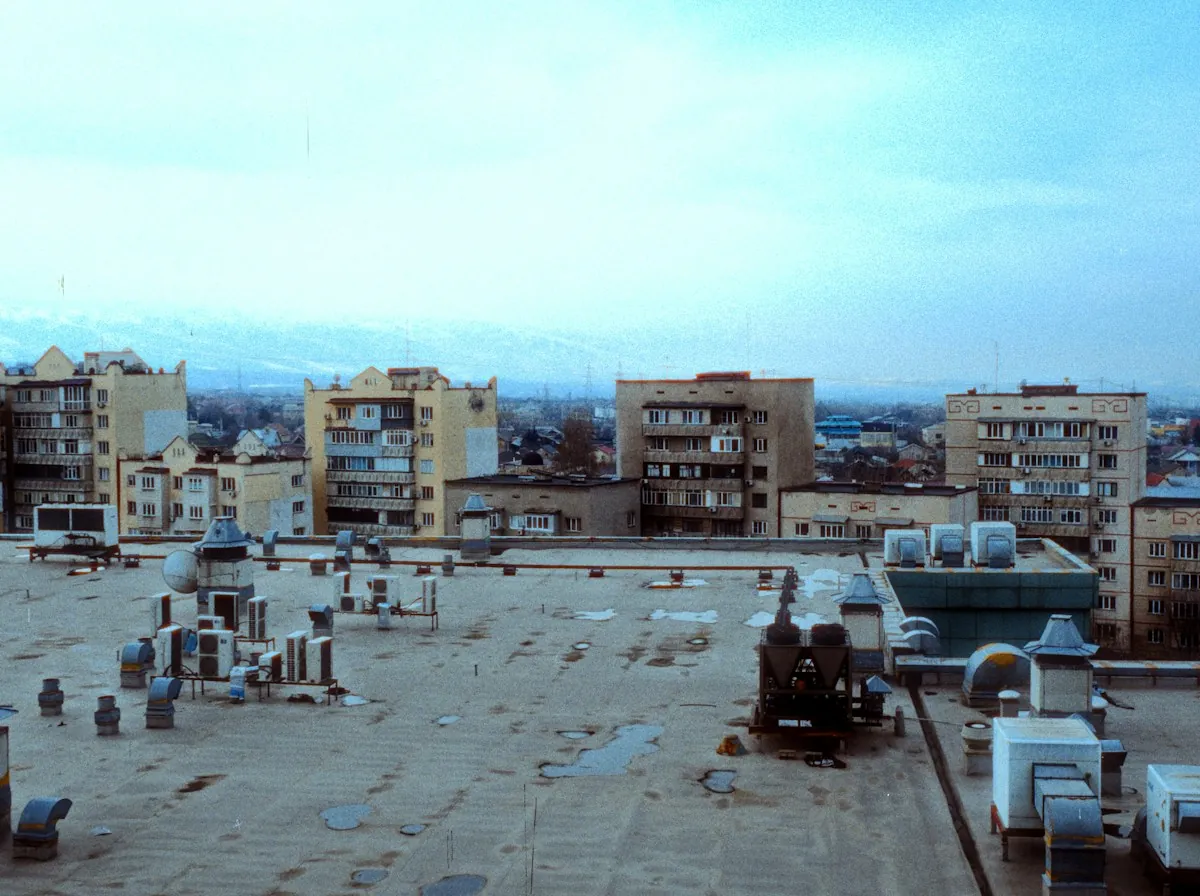
Most low slope in this city sits on three-family houses and rear additions, at $5 to $14 per square foot by system. It almost never fails in the middle of the field -- it fails at the outlet, the parapet, the coping and the upstand at a wall, and in a freezing winter standing water lifts a lap mechanically.
Flat roofing in New Jersey installs at $5 to $14 per square foot by system: EPDM $5 to $9, TPO $6 to $12, tear-off and insulation included. On a 1,500 square foot section that is $7,500 to $13,500 in EPDM against $9,000 to $18,000 in TPO.


New Jersey flat roofing installs at $5 to $14 per square foot by system -- EPDM $5 to $9, TPO $6 to $12, tear-off and insulation included. On a 1,500 square foot section that is $7,500 to $13,500 in EPDM against $9,000 to $18,000 in TPO. Locally the unit count moves a quote before the roof does. One or two units and detached means no permit and no waiting; three means permit, inspection and tenants. After that it is access, because a frontage that has to carry material up and waste down is labor a suburban quote does not contain.
Standing water 48 hours after rain means the fall is wrong or the outlet is blocked. In a freezing winter that water expands inside a lap and lifts it, then thaws and runs in through the gap it made. Re-covering over it buys a couple of seasons.
Parapets, copings and internal outlets, each of which has to be formed and flashed. Insulation, which is a real part of the cost and should be stated. And occupied units underneath, which decide the sequence.
EPDM is the least expensive and on a small rear addition it is frequently correct. TPO earns its premium on larger areas. We will say which applies rather than defaulting to the pricier one.
Unit count decides more here than the covering does. At three dwelling units a roof replacement is permitted construction rather than ordinary maintenance, and the building is also a registered multiple dwelling on a five-year inspection cycle. Two identical houses on one street can sit either side of that line.
East Orange has one of the highest shares of two- and three-family housing in Essex County, which is why the three-unit threshold matters more here than almost anywhere else in the state.
Most of the low slope in this city is on three-family houses and rear additions, and almost none of it fails in the middle of the field. It fails at the outlet, the parapet, the coping and the upstand at a wall. Water that cannot leave finds the weakest of those and stays until it does.
One is about your building and one is about your covering, and most quotes in this city establish neither.
At one or two and detached, replacing a covering is ordinary maintenance under N.J.A.C. 5:23-2.7: no permit, no inspection. At three it is permitted construction work, and the building is also a registered multiple dwelling under N.J.S.A. 55:13A-1 et seq. on a five-year inspection cycle. Nothing about the roof explains that.
On asphalt, if the covering away from the leak still lies flat, holds its granules and is not brittle, the roof has life in it and a repair is the right job. A failed flashing or a split upstand is hundreds of dollars and is routinely produced as proof that the whole roof is finished.
Two coverings is the practical ceiling. A roof already at two is a tear-off whatever anybody quotes, and it takes two minutes to check at the rake edge. It is the fastest way to tell whether the quotes in front of you describe the same job.
Before the covering, the count.
This is the building this city is made of, and the one roofing advice ignores.
Architectural at $5.50 to $8.00 per square foot against three-tab at $4.50 to $6.50 is the difference between two quotes that otherwise look identical.
Replacing an existing slate roof is $20 to $35 per square foot, so $40,000 to $70,000 on an average house.
Fixed costs do not shrink, and that is the part nobody volunteers.
The largest houses, and where slate survives.
Genuinely mixed eras. A neighbor proves nothing.
Duplexes divided into three, and the traces that leaves.
Tight frontages, tenants, and nowhere to park a dumpster.
Flat roofs behind parapets. Access comes first.
Same buildings, a different construction office.
Three-plus units is the default, not the exception.
The questions that come up, before you have to ask.
More urgent than in a warm climate. Water still sitting 48 hours after rain means the fall is wrong or the outlet is blocked, and in a freezing winter that water expands inside laps and under flashings and lifts them mechanically.
EPDM at $5 to $9 per square foot is the cheaper system and on a small rear addition it is frequently right. TPO at $6 to $12 earns its premium on larger areas. We will tell you which applies rather than defaulting to the pricier one.
An architectural asphalt roof in New Jersey runs $9,500 to $26,000, and on a typical 2,000 square foot house most people pay $12,000 to $18,000 installed. Per square foot that is $5.50 to $8.00 for architectural and $4.50 to $6.50 for three-tab. Slate is a different market entirely: $20 to $35 per square foot to replace an existing one.
Yes. The ordinary-maintenance exemption in N.J.A.C. 5:23-2.7 reaches one- and two-family dwellings, so at three units a covering replacement becomes permitted construction work with an inspection at the end. There is a second consequence as well: at three units the building is a multiple dwelling under N.J.S.A. 55:13A-1 et seq.
Usually not. Slate outlives almost everything fixed to it, and slipped slates on a pre-war roof normally mean the nails have corroded rather than that the slate has failed. Leaks at a valley usually mean a rusted lining. Both are repairs, and replacing an existing slate roof at $20 to $35 per square foot is a very expensive way to fix a nail problem.
Unit count established before anything is priced. New Jersey figures, not a national calculator.