Flat Roof Replacement in Presidential Estates from $5. EPDM, TPO or modified bitumen, priced per square foot, with the drainage looked at before the membrane. Free inspection and a written quote.
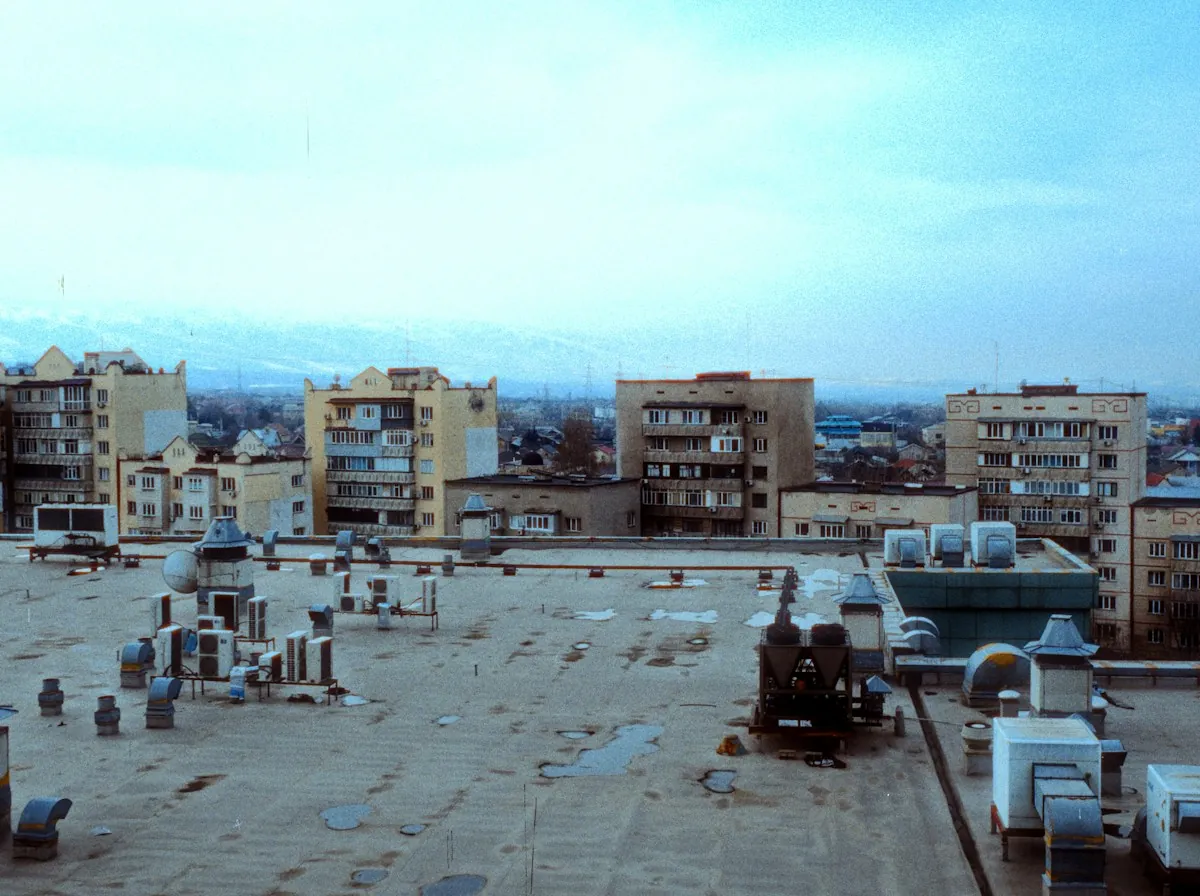
Flat roofs here are usually over a rear extension or a porch on an otherwise pitched house, which raises a useful distinction: re-covering the flat section may be ordinary maintenance, while rebuilding its fall is structural and is not. That is worth knowing before choosing between them.
Flat roofing in New Jersey installs at $5 to $14 per square foot by system: EPDM $5 to $9, TPO $6 to $12, tear-off and insulation included. On a 1,500 square foot section that is $7,500 to $13,500 in EPDM against $9,000 to $18,000 in TPO.


New Jersey flat roofing installs at $5 to $14 per square foot by system -- EPDM $5 to $9, TPO $6 to $12, tear-off and insulation included. On a 1,500 square foot section that is $7,500 to $13,500 in EPDM against $9,000 to $18,000 in TPO. Expect the widest spread on this site here, because the covering might be slate. An asphalt roof on one of these houses sits in the normal range; a slate roof does not, and the difference between repairing one and replacing it is tens of thousands of dollars.
Standing water 48 hours after rain means the fall is wrong or the outlet is blocked. In a freezing winter that water expands inside a lap and lifts it, then thaws and runs in through the gap it made. Re-covering over it buys a couple of seasons.
Parapets, copings and internal outlets, each of which has to be formed and flashed. Insulation, which is a real part of the cost and should be stated. And occupied units underneath, which decide the sequence.
EPDM is the least expensive and on a small rear addition it is frequently correct. TPO earns its premium on larger areas. We will say which applies rather than defaulting to the pricier one.
This is where slate is most likely to still be on the roof, and where the expensive mistake gets made. On these houses the slate is frequently sound while the nails and valley linings have gone -- a repair, not a replacement, and the difference runs to tens of thousands of dollars.
One is about your building and one is about your covering, and most quotes in this city establish neither.
At one or two and detached, replacing a covering is ordinary maintenance under N.J.A.C. 5:23-2.7: no permit, no inspection. At three it is permitted construction work, and the building is also a registered multiple dwelling under N.J.S.A. 55:13A-1 et seq. on a five-year inspection cycle. Nothing about the roof explains that.
On asphalt, if the covering away from the leak still lies flat, holds its granules and is not brittle, the roof has life in it and a repair is the right job. A failed flashing or a split upstand is hundreds of dollars and is routinely produced as proof that the whole roof is finished.
Two coverings is the practical ceiling. A roof already at two is a tear-off whatever anybody quotes, and it takes two minutes to check at the rake edge. It is the fastest way to tell whether the quotes in front of you describe the same job.
Bigger houses, bigger roofs, and a real chance the covering is slate rather than asphalt.
A large pre-war house divided into three is the awkward case here, because the roof is substantial and possibly slate while the regulatory position is the multi-family one.
Asphalt on these houses is usually a replacement for something else, and the something else was often slate.
This is where slate most often survives in the city, and where the expensive mistake gets made most.
Larger houses here have natural divisions -- a main roof, a wing, a porch, a garage -- and that makes partial work honest rather than a compromise.
The three-unit line runs right through this city.
Genuinely mixed eras. A neighbor proves nothing.
Duplexes divided into three, and the traces that leaves.
Tight frontages, tenants, and nowhere to park a dumpster.
Flat roofs behind parapets. Access comes first.
Same buildings, a different construction office.
Three-plus units is the default, not the exception.
The questions that come up, before you have to ask.
More urgent than in a warm climate. Water still sitting 48 hours after rain means the fall is wrong or the outlet is blocked, and in a freezing winter that water expands inside laps and under flashings and lifts them mechanically.
EPDM at $5 to $9 per square foot is the cheaper system and on a small rear addition it is frequently right. TPO at $6 to $12 earns its premium on larger areas. We will tell you which applies rather than defaulting to the pricier one.
Yes. The ordinary-maintenance exemption in N.J.A.C. 5:23-2.7 reaches one- and two-family dwellings, so at three units a covering replacement becomes permitted construction work with an inspection at the end. There is a second consequence as well: at three units the building is a multiple dwelling under N.J.S.A. 55:13A-1 et seq.
A building with three or more dwelling units is a multiple dwelling under the Hotel and Multiple Dwelling Law. It is registered with the DCA Bureau of Housing Inspection and inspected on a five-year cyclical basis, with a certificate of inspection filed afterwards. It is an ongoing maintenance regime rather than a one-off approval, and it applies whether or not anybody is doing work.
Because most online figures are national and this is not a national market. New Jersey pricing is $9,500 to $26,000 for an architectural asphalt roof, and a good part of the difference is detailing a warm climate does not need: ice barrier at the eaves, drip edge, and the nailing to survive a February gust.
Unit count established before anything is priced. New Jersey figures, not a national calculator.