Partial Roof Replacement in Brick Church from $4.50. One slope, one structure, or one building of several -- priced with the fixed costs stated honestly. Free inspection and a written quote.
Partial work here usually means the flat roof and not the pitch, or one section of a larger flat roof. That can be the right call, but a membrane joined to older membrane is a joint, and a joint is a future leak unless it is detailed properly rather than lapped.
Partial work is priced from the same per-square-foot rates, and the warning that belongs with it is the one nobody volunteers: the fixed costs do not shrink. Mobilization, waste and a crew day cost much the same on a third of a roof as on all of it.


Partial work is priced from the same per-square-foot rates, and the honest warning is that the fixed costs do not shrink. Permit where it applies, mobilization, waste and a crew day cost much the same on a third of a roof as on all of it. Price the access and the hours, not just the roof. A route through a shop or an occupied flat, and trading hours that decide when work can happen, are both real constraints -- and the roof is usually flat behind the parapet rather than the pitch you can see.
Across separate structures or separate buildings, where the roofs are different ages anyway. A garage, a rear addition and the house are three roofs, and doing the worst one now is a real decision rather than a compromise.
Splitting one roof across two years. You pay mobilization twice, you get a visible line where new meets weathered, and the half left behind ages through another winter first.
New covering next to four-year-old covering does not match, even in the same product from the same batch. On a street elevation that matters; on a rear addition it does not, and that is usually where a partial makes sense.
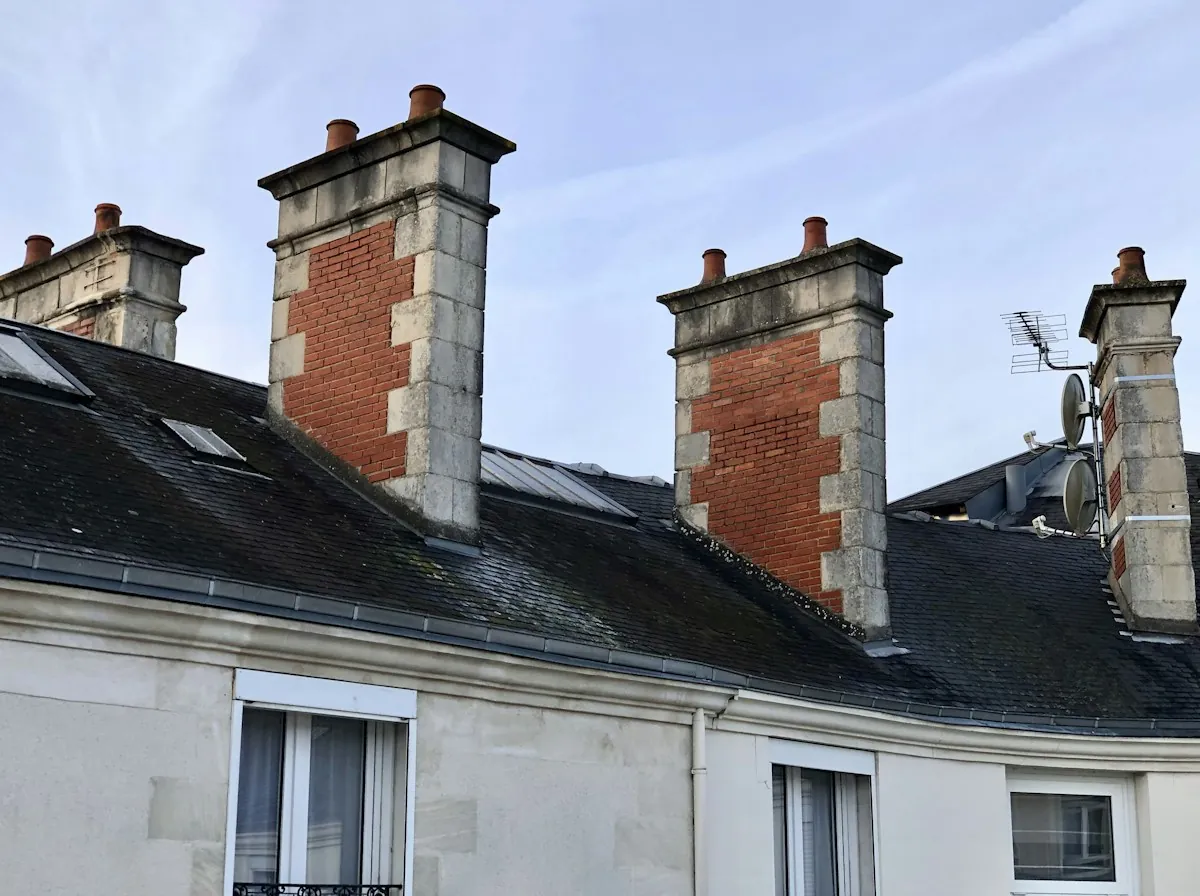
Flat roofs behind street-facing parapets are the Brick Church job, and access is the first problem rather than the roof: a roof reached through an occupied unit or a commercial tenancy needs somebody with keys to be part of the conversation before a date is set.
One is about your building and one is about your covering, and most quotes in this city establish neither.
Slate outlives almost everything fixed to it. Slipped slates usually mean corroded nails; leaks at a valley usually mean a rusted lining. Both are repairs. Replacing an existing slate roof is $20 to $35 per square foot, so the difference between diagnosing that correctly and not runs to tens of thousands.
On asphalt, if the covering away from the leak still lies flat, holds its granules and is not brittle, the roof has life in it and a repair is the right job. A failed flashing or a split upstand is hundreds of dollars and is routinely produced as proof that the whole roof is finished.
Two coverings is the practical ceiling. A roof already at two is a tear-off whatever anybody quotes, and it takes two minutes to check at the rake edge. It is the fastest way to tell whether the quotes in front of you describe the same job.
Mixed-use changes the order of work.
Where the ground floor is commercial and the upper floors are flats, the building is still a multiple dwelling and the roof still has to be reached.
Here the flat roof is the whole roof, behind a street parapet, with internal drainage.
Where there is a pitched slope here it is usually a small street-facing section in front of a flat roof, and the transition between them is the interesting part.
Slate on a mixed-use building is usually confined to a street elevation, with flat roofing behind it.
The three-unit line runs right through this city.
The largest houses, and where slate survives.
Genuinely mixed eras. A neighbor proves nothing.
Duplexes divided into three, and the traces that leaves.
Tight frontages, tenants, and nowhere to park a dumpster.
Same buildings, a different construction office.
Three-plus units is the default, not the exception.
The questions that come up, before you have to ask.
Not exactly, and anybody who says otherwise has not tried. Even the same product from the same batch reads differently against covering that has had four summers on it. We will tell you where that will show and put the new work where it matters least if there is a choice.
It can, and not in the direction people expect. A covering replacement on a detached one- or two-family house is ordinary maintenance whatever the area; the moment the work goes structural -- decking out wholesale, pitch altered -- it is permitted work. The scope decides it, not the percentage.
Two to four days on site for a house, three to five for a three-family building, and one to three weeks for slate -- slate cannot be rushed without breaking material. Weather moves all of them and we will not dry-in a roof we cannot finish. Where a permit applies, the filing and closing inspection are days on top.
Across separate structures, yes, and it is often the right answer -- a garage, a rear addition and the house are three roofs of three different ages. Across one roof, usually not: mobilization and waste cost much the same twice as once, you get a visible line where new meets weathered, and the half left behind ages through another winter.
An architectural asphalt roof in New Jersey runs $9,500 to $26,000, and on a typical 2,000 square foot house most people pay $12,000 to $18,000 installed. Per square foot that is $5.50 to $8.00 for architectural and $4.50 to $6.50 for three-tab. Slate is a different market entirely: $20 to $35 per square foot to replace an existing one.
Unit count established before anything is priced. New Jersey figures, not a national calculator.