Three Family Roof Replacement in Irvington from $9,500. Three units is where New Jersey changes its mind about your building, twice, for two unrelated reasons. Free inspection and a written quote.
This is the default building in Irvington rather than a special case, and it shows in how straightforward the process is: the permit is expected, the building is already registered, and the only real variable is how well the tenant arrangements are made. That is where the schedule is won or lost.
A three-family house is the defining building of this city and the least well served by roofing advice. Two things happen at that third unit and neither has anything to do with roofs. The ordinary-maintenance exemption in N.J.A.C. 5:23-2.7 covers one- and two-family dwellings, so a covering replacement becomes permitted construction work. And the building becomes a multiple dwelling under N.J.S.A. 55:13A-1 et seq.


The roofing costs what roofing costs, in the same New Jersey range. What changes at three units is everything around it: the ordinary-maintenance exemption no longer reaches the building, so the work is permitted construction, and the building is a registered multiple dwelling under N.J.S.A. 55:13A-1 et seq. on a five-year inspection cycle. Assume permitted work and price the tenant logistics, because three-plus units is the default here. Rear sections at a shallower pitch are the other thing to watch -- they belong in the quote as their own area rather than averaged into the main roof.
The fee is modest; the filing and the closing inspection are days. Build them into the program rather than discovering them, and treat any contractor who says a three-family needs no permit with caution.
Written notice, an agreed parking plan, a waste route that does not block an entrance, and a section-by-section sequence that never leaves an occupied unit under an open roof overnight. That is slower than an empty house and it is not optional.
Mobilization, permit and waste cost much the same once as twice, and half a roof on a tenanted building carries the risk of the winter in between. Phasing makes sense across separate buildings, not across one roof.
Irvington has a high proportion of three-unit-and-up buildings, so permitted work and multiple-dwelling status are the default rather than the exception here. That makes the paperwork predictable, and it makes the tenant logistics the part of the job worth planning properly.
Two clocks run on this work in this city and only one of them is about the weather.
Northern roofs fail at the edges in the freeze. Water backs up under the courses at the eaves, freezes, lifts them, and the ceiling below stains during the first thaw -- so the calls arrive in a cluster, in the same two weeks, and the roof that could have been done comfortably in September becomes an emergency in February.
Assume permitted work in Irvington and you will usually be right.
With so many three-plus buildings, most Irvington flat roofs are over occupied units, and that decides the sequence rather than the specification.
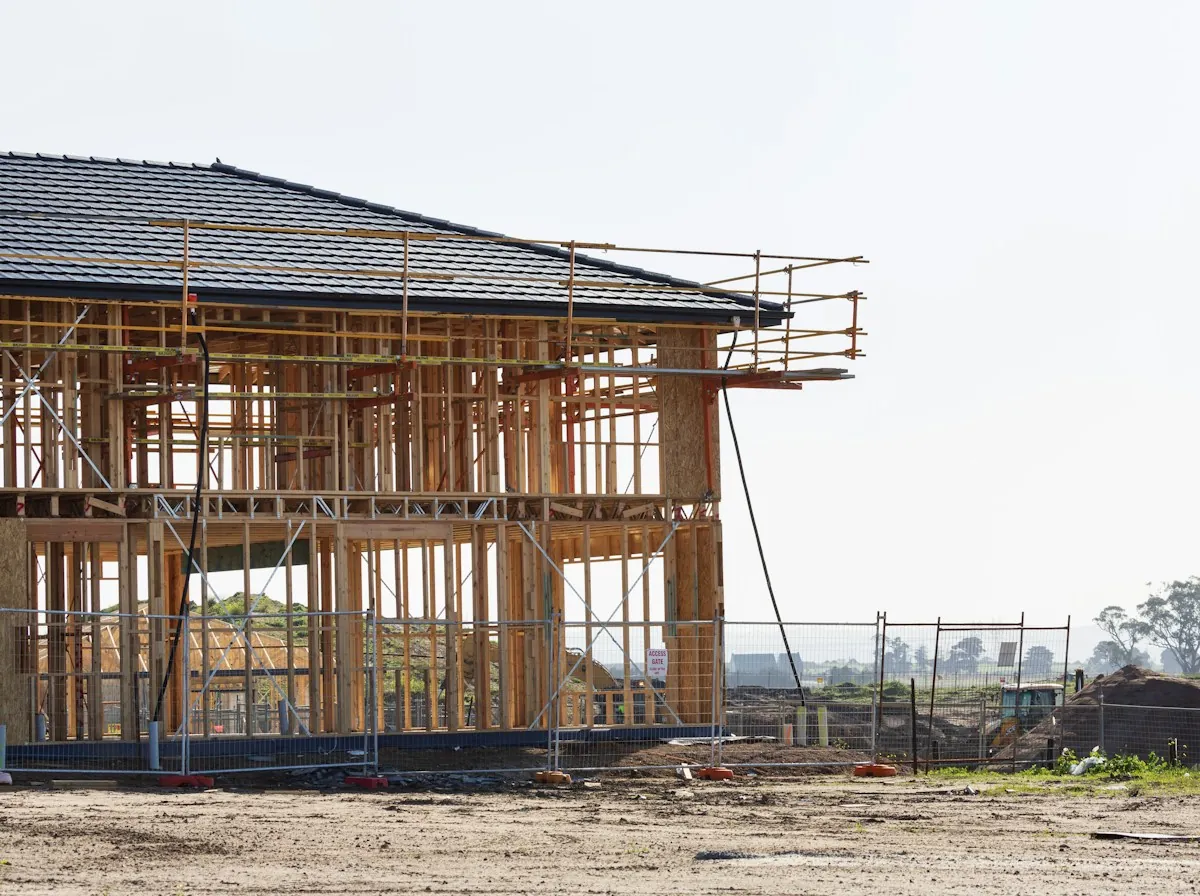
On a three-family house the roof is bigger than the frontage suggests and frequently has a rear section at a shallower pitch.
Slate on a three-family house raises a specific problem: any work involving scaffold and salvage over occupied units takes longer, and slate cannot be rushed without breaking it.
On a multi-building property, partial means by building rather than by slope: worst roof first, the rest scheduled.
The three-unit line runs right through this city.
The largest houses, and where slate survives.
Genuinely mixed eras. A neighbor proves nothing.
Duplexes divided into three, and the traces that leaves.
Tight frontages, tenants, and nowhere to park a dumpster.
Flat roofs behind parapets. Access comes first.
Same buildings, a different construction office.
The questions that come up, before you have to ask.
Yes, in writing, and earlier than you think. They need to know when work starts, when the curb will be unavailable and which days are noisiest. It is also the practical difference between a four-day job and two weeks of interruptions, so it is in your interest as much as theirs.
No. Work is sequenced section by section so that anything opened is closed and made watertight the same day. If weather means a section cannot be closed, it does not get opened -- which is slower on paper and cheaper in practice.
No. The inspection is free, the written quote is free, and neither carries an obligation. The survey also answers the unit-count and permit question in writing, which is worth having even if you use somebody else. What we will not do is give you a number at the curb without going up.
An architectural asphalt roof in New Jersey runs $9,500 to $26,000, and on a typical 2,000 square foot house most people pay $12,000 to $18,000 installed. Per square foot that is $5.50 to $8.00 for architectural and $4.50 to $6.50 for three-tab. Slate is a different market entirely: $20 to $35 per square foot to replace an existing one.
A building with three or more dwelling units is a multiple dwelling under the Hotel and Multiple Dwelling Law. It is registered with the DCA Bureau of Housing Inspection and inspected on a five-year cyclical basis, with a certificate of inspection filed afterwards. It is an ongoing maintenance regime rather than a one-off approval, and it applies whether or not anybody is doing work.
Unit count established before anything is priced. New Jersey figures, not a national calculator.