Three Family Roof Replacement in Elmwood from $9,500. Three units is where New Jersey changes its mind about your building, twice, for two unrelated reasons. Free inspection and a written quote.
Three tenancies on a tight frontage is the hardest scheduling problem on this site. There is one route up, one route down for waste, and nowhere for three households to park. Getting that agreed in writing before the first day is the difference between a four-day job and a two weeks of interruptions.
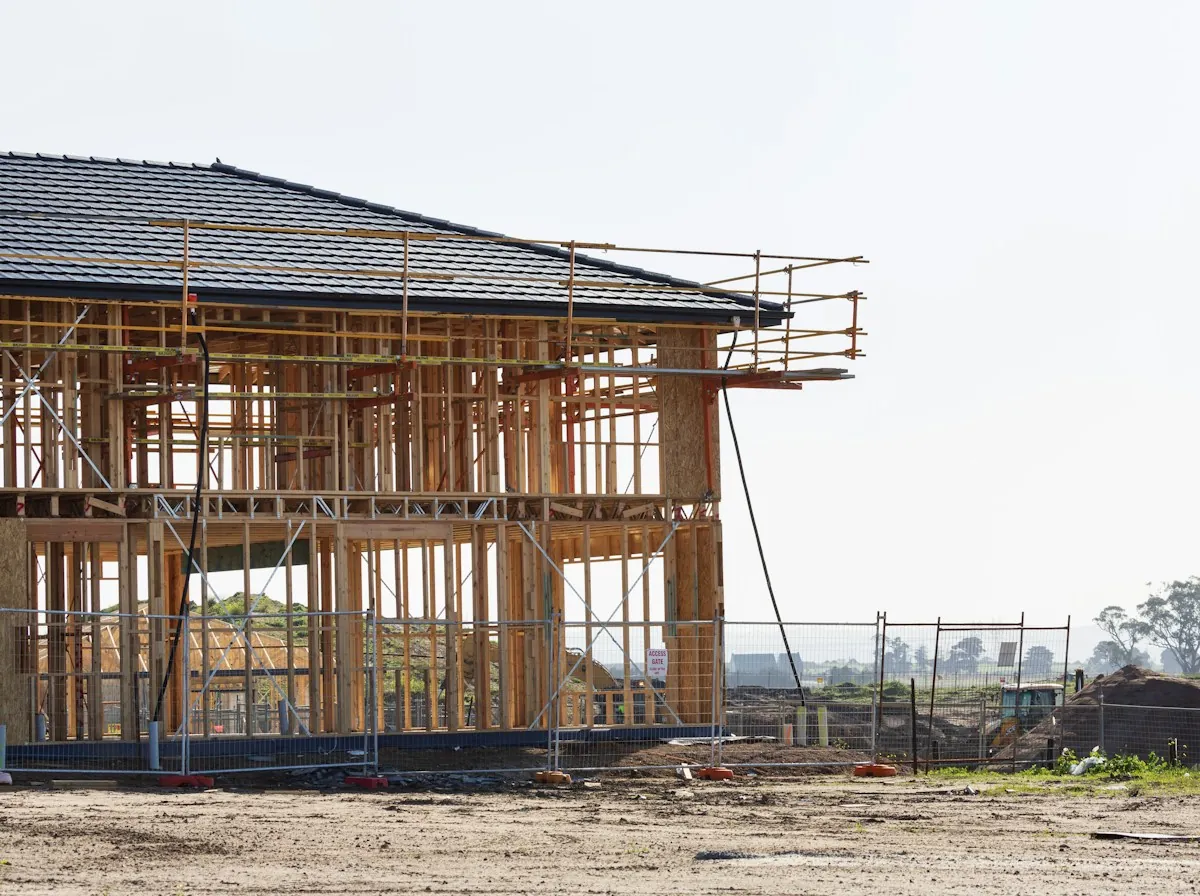
A three-family house is the defining building of this city and the least well served by roofing advice. Two things happen at that third unit and neither has anything to do with roofs. The ordinary-maintenance exemption in N.J.A.C. 5:23-2.7 covers one- and two-family dwellings, so a covering replacement becomes permitted construction work. And the building becomes a multiple dwelling under N.J.S.A. 55:13A-1 et seq.


The roofing costs what roofing costs, in the same New Jersey range. What changes at three units is everything around it: the ordinary-maintenance exemption no longer reaches the building, so the work is permitted construction, and the building is a registered multiple dwelling under N.J.S.A. 55:13A-1 et seq. on a five-year inspection cycle. Access is the line to expect, and it is not padding. One route up, one route down for waste, and on a tenanted house a parking arrangement while the dumpster is on the curb. It also makes phasing worse value here than elsewhere, because mobilization is the expensive part.
The fee is modest; the filing and the closing inspection are days. Build them into the program rather than discovering them, and treat any contractor who says a three-family needs no permit with caution.
Written notice, an agreed parking plan, a waste route that does not block an entrance, and a section-by-section sequence that never leaves an occupied unit under an open roof overnight. That is slower than an empty house and it is not optional.
Mobilization, permit and waste cost much the same once as twice, and half a roof on a tenanted building carries the risk of the winter in between. Phasing makes sense across separate buildings, not across one roof.
Tight frontages are the practical constraint. Material goes up the front and waste comes down the front, so the sidewalk is part of the plan rather than an afterthought -- and on a three-family house with tenants, so is where they park while the work runs.
One is about your building and one is about your covering, and most quotes in this city establish neither.
Slate outlives almost everything fixed to it. Slipped slates usually mean corroded nails; leaks at a valley usually mean a rusted lining. Both are repairs. Replacing an existing slate roof is $20 to $35 per square foot, so the difference between diagnosing that correctly and not runs to tens of thousands.
On asphalt, if the covering away from the leak still lies flat, holds its granules and is not brittle, the roof has life in it and a repair is the right job. A failed flashing or a split upstand is hundreds of dollars and is routinely produced as proof that the whole roof is finished.
Two coverings is the practical ceiling. A roof already at two is a tear-off whatever anybody quotes, and it takes two minutes to check at the rake edge. It is the fastest way to tell whether the quotes in front of you describe the same job.
Tight frontages set the logistics and the logistics set part of the price.
Short runs are the Elmwood problem.
Low eaves close to a neighbor make the first three feet both the most vulnerable part of the roof and the hardest to work.
Less slate survives here than in the larger-house districts, so when it does appear the profile and size are less likely to be matchable from stock.
Tight sites make phasing worse than it looks, because mobilization is a bigger share of the cost when access is difficult.
The three-unit line runs right through this city.
The largest houses, and where slate survives.
Genuinely mixed eras. A neighbor proves nothing.
Duplexes divided into three, and the traces that leaves.
Flat roofs behind parapets. Access comes first.
Same buildings, a different construction office.
Three-plus units is the default, not the exception.
The questions that come up, before you have to ask.
Yes, in writing, and earlier than you think. They need to know when work starts, when the curb will be unavailable and which days are noisiest. It is also the practical difference between a four-day job and two weeks of interruptions, so it is in your interest as much as theirs.
No. Work is sequenced section by section so that anything opened is closed and made watertight the same day. If weather means a section cannot be closed, it does not get opened -- which is slower on paper and cheaper in practice.
Because most online figures are national and this is not a national market. New Jersey pricing is $9,500 to $26,000 for an architectural asphalt roof, and a good part of the difference is detailing a warm climate does not need: ice barrier at the eaves, drip edge, and the nailing to survive a February gust.
Two to four days on site for a house, three to five for a three-family building, and one to three weeks for slate -- slate cannot be rushed without breaking material. Weather moves all of them and we will not dry-in a roof we cannot finish. Where a permit applies, the filing and closing inspection are days on top.
No. The inspection is free, the written quote is free, and neither carries an obligation. The survey also answers the unit-count and permit question in writing, which is worth having even if you use somebody else. What we will not do is give you a number at the curb without going up.
Unit count established before anything is priced. New Jersey figures, not a national calculator.